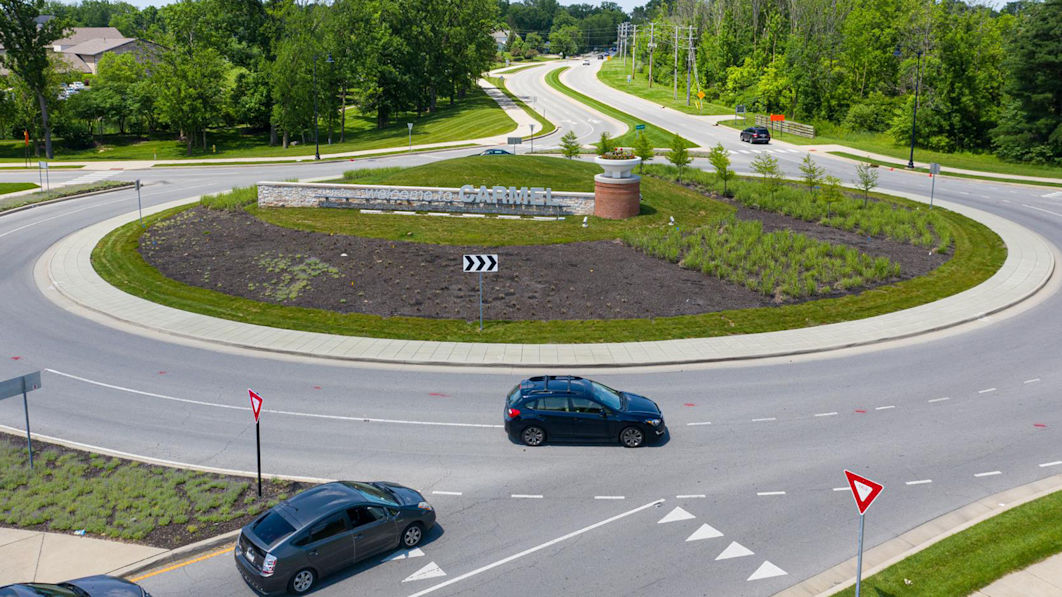
Over the last few decades, Carmel, Ind., has become the roundabout capital of the U.S. It has more than any other American city at a total of 138. And according to a recent IIHS study, those roundabouts have made a pretty dent in crashes: 47% overall across all types.
The study looked at crash data for the two years before an intersection was changed over to a roundabout, and then the two years after. This was done with 64 roundabouts in the city including single-lane, multi-lane, and the “double-teardrop” or “dogbone” roundabout, which is like a normal one, but with a stretched, narrow middle. The dogbone versions saw the biggest improvements with a reduction in all crashes by 63%, and a reduction in injury-causing crashes by 84% compared with what would’ve been expected in conventional traffic light- or stop sign-controlled intersections. Multi-lane roundabouts didn’t show a huge change, with damage-only crashes going up slightly, and injury-causing crashes dropping slightly.
The IIHS believes that part of the reason the dogbone roundabouts saw such big improvements was because of their use at high-speed intersections. They’ve been added to areas where four-lane parkway roads cross with smaller surface streets. And the improvements across the board likely come from the fact that roundabouts both slow vehicles and reduce the chances for head-on or right-angle collisions. As for the limited effect of multi-lane versions, the IIHS believes some of it comes from the design being a bit difficult or confusing for drivers, but notes that some studies show drivers get used to them and see reductions in crashes over time.