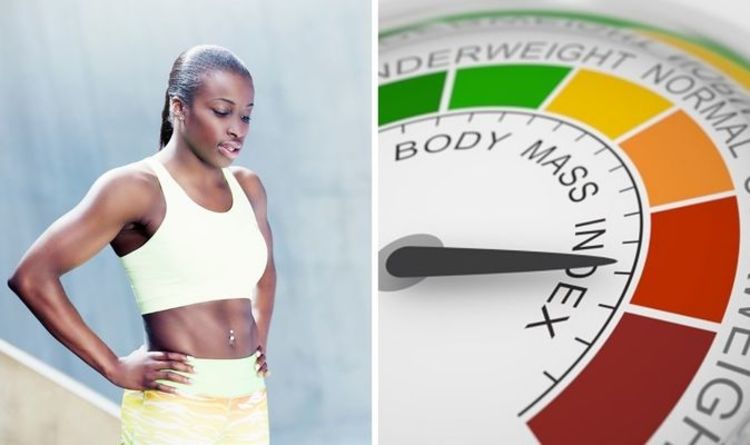
BMI was first worked out in the 1830s, when a Belgian astronomer, mathematician, statistician and sociologist worked out the sum. The aim was to figure out whether a person was a healthy weight, simply by dividing their weight by their height. This method is still used, but it has been argued the BMI doesn’t take into consideration the complexity o the human body. What is a healthy BMI?
What is a healthy BMI?
Your BMI uses your height and weight to work out if you are a healthy weight, but it can’t tell if you are carrying too much fat if you have a lot of muscle.
A BMI should be treated as a starting point since muscle is much denser than fat so people often end up with a BMI which classes them as obese when they aren’t.
This is one of its biggest flaws because muscly athletes could have the same BMI as couch potatoes.
The Body Mass Index doesn’t take into consideration your muscle mass, bone density, overall body composition, and racial and sex differences.
READ MORE- How to prevent a stroke: Lifestyle modifications to reduce your risk
Some scientists argue BMI exaggerates thinness in short people and fatness in tall people, so the results can sometimes be misleading.
Waist to height ratio is sometimes considered a better way to check how healthy your weight is.
This is because carrying too much fat around your waist puts you at a higher risk of conditions such as heart disease, type two diabetes, cancer, and stroke.
If your waist measurement is more than 94cm as a man or 80cm as a woman you should try to lose weight, according to the NHS.
What is a healthy BMI?
A BMI between 18.5 and 24.9 is considered healthy, 25 to 30 is overweight and more than 30 is obese.
If your BMI is between 18.5 and 20, you are considered a bit underweight and shouldn’t lose any more.
A BMI of less than 18.5 is considered very underweight, and a BMI of 40 or over means you are severely obese.
Why is it bad to have a high BMI?
The most common method to check obesity is BMI, but BMI isn’t used to diagnose obesity.
The main reason for this is because people who are very muscular can also have a high BMI with very little body fat.
If you have a high BMI and are obese, you are at a higher risk of life-threatening conditions such as type two diabetes, coronary heart disease, cancer, and stroke
A high BMI when linked to obesity can affect your quality of life and lead to mental health problems such as depression and low self-esteem.
DON’T MISS… Donald Trump weight: Trump’s BMI – Is Donald Trump obese? [INFORMER] High cholesterol: Having this type of body shape won’t help [INSIGHT] Am I overweight? How to calculate your BMI [EXPLAINER]
Why is it bad to have a low BMI?
We hear about the risks of being overweight all the time, but the problems associated with being underweight are rarely discussed.
According toPatient.info: “Some people naturally find it hard to put on weight.
“If your weight is constant and you have no long-term medical problems and a good diet, you probably don’t need to worry.
“If you’re malnourished, on the other hand, you definitely need to do something about it.”
Being underweight puts you at risk of being malnourished, weakens your immune system, and gives you fragile bones.