Coronavirus cure: How is a vaccine made?
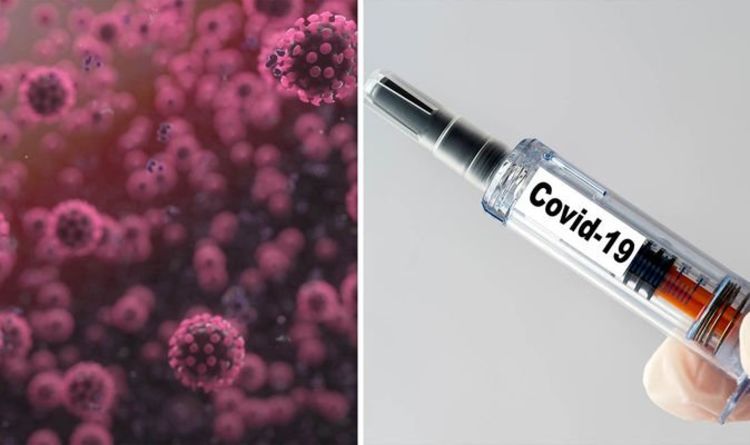
Coronavirus is spreading rapidly around the world and there are still no drugs which can fight the virus or vaccines which can protect against it. The first vaccine has been given to a 90-year-old grandmother from Northern Ireland as the UK’s mass vaccination programme officially launched today. There are more than 20 vaccines in development, but how is a vaccine made?
What is a vaccine?
A vaccine is a type of medicine which trains the body’s immune system enabling it to fight a disease it has not come into contact with before.
Vaccines are designed to prevent disease in the first place, rather than treat it once you have contracted it.
Research into a coronavirus vaccine is happening at breakneck speed, with human trials expected imminently.
READ MORE: Weapons lab aims to have coronavirus vaccine ready by June
When will a coronavirus vaccine be ready?
The coronavirus pandemic has prompted around 35 companies and academic institutions to create a vaccine.
At least four of these have candidates which are testing in animals, while the first of these is due to enter human trials imminently.
Britain now has 800,000 doses of the Pfizer/BioNTech vaccine which will enable 400,000 people to be vaccinated.
Another 3.2 million doses are expected to arrive in the UK by the end of December.
In total, the UK ordered 40 million doses of the Pfizer/BioNTech which are due to arrive in early next year.
The first step to make a vaccine is the generation of an antigen used to induce an immune response.
Typically viruses are grown in primary cells, such as chicken eggs for the influenza vaccine, or on continuous cell lines, such as human cultured cells for hepatitis b vaccine.
The second step is to release the antigen from the cells and isolate it from the material used in its growth.
Proteins and other parts of the growth medium may still be present and must be removed during the next step.
The second stage of creating a vaccine is to release as much virus or bacteria as possible.
The third step is to purify the antigen.
For vaccines that are made from recombinant proteins, which may involve chromatography, which is a process of separating materials, and ultrafiltration.
At this stage, inactivation may occur.
The next step is when there may be an addition of an adjuvant, which is a material that nonspecifically enhances immune responses.
Vaccines may also include stabilisers to prolong shelf-life or preservatives to allow multi-dose vials to be used safely.
The last step in the vaccine process is combining all components which make up the final vaccine and uniforming mixing them in a single vessel.
Afterwards, the vaccine is filled into vials or syringe packages, sealed with sterile stoppers or plungers and then labelled for widespread distribution.
Some vaccines are freeze-dried and then rehydrated at the time of administration.
Stay connected with us on social media platform for instant update click here to join our ????️????️ Twitter, & Facebook
We are now on Telegram. Click here to join our channel (@TechiUpdate) and stay updated with the latest Health headlines.
For all the latest Health News Click Here
For the latest news and updates, follow us on Google News.
Also, if you like our efforts, consider sharing this story with your friends, this will encourage us to bring more exciting updates for you.