Dementia symptoms: Are you forgetful or is it a symptom of the condition? Signs to spot
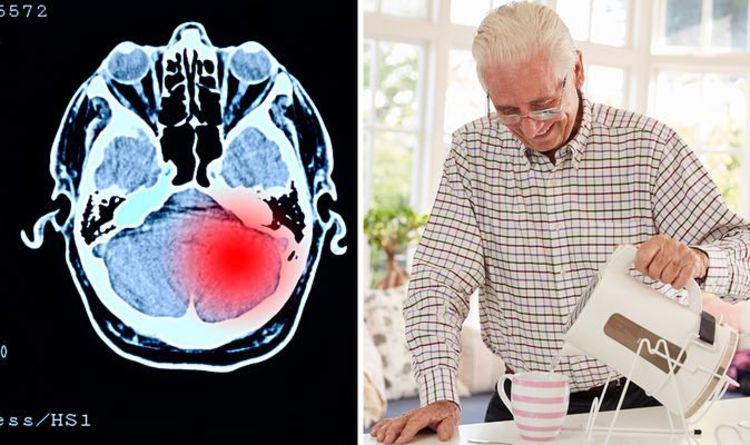
Alzheimer’s disease is the most common form of dementia, accounting for around 60 percent of cases of the progressive brain condition. What are the warning signs?
The Alzheimer’s Society confirmed that memory lapses may initially be mistaken for normal forgetfulness.
The defining feature of memory loss in those with dementia is that it will continually get worse.
As memory troubles become more severe and persistent, it’s more likely that family and friends will notice the changes rather than the person affected.
It’s not unusual for a person with dementia to be able to recall experiences from earlier in their life, but struggle to remember recent events.
“In the early stages, the person’s long-term memory is often less affected,” said Alzheimer’s Society.
“This is probably because older memories – which are thought about more often – become more firmly established and are more likely to be recalled than newer memories.”
How does memory work in healthy individuals?
Harvard University defines memory as “information retention over time” that consists of three main processes:
- Encoding
- Storage
- Retrieval (or recall)
READ MORE: Dementia: Pioneering new test may help to determine dementia risk, finds new study
Regardless whether information is stored in short-term or long-term memory, retrieving it is needed to make use of said information.
3.Retrieval
Short-term memory is retrieved in the order in which it’s stored, whereas long-term memory is retrieved through association.
Memory loss in dementia
The Alzheimer’s Association said that memory loss is “often due to damage in a part of the brain called the hippocampus”.
The hippocampus plays a crucial role in day-to-day memory, and damage to it can show up in a variety of ways.
For example, a person with dementia may forget “recent conversations or events”.
They might struggle to “find the right words in a conversation” or forget “names of people and objects”.
Memory lapses can include losing or misplacing items, such as glasses, around the house.
In more severe cases, a person with dementia could struggle with performing familiar tasks such as making tea.
What once used to be second-nature becomes more difficult as the dementia sufferer fails to recall to boil the kettle, put a teabag in the mug and add a splash of milk.
Anniversaries, appointments, and taking medication could fall to the wayside, as the person with the brain disease forgets important dates and tasks.
To others, it will be clear the person they care about is suffering from dementia when they struggle to remember a familiar route.
For example, becoming lost from the local supermarket back to their house (when done a billion times) is indicative of the brain disease.
Stay connected with us on social media platform for instant update click here to join our ????️????️ Twitter, & Facebook
We are now on Telegram. Click here to join our channel (@TechiUpdate) and stay updated with the latest Health headlines.
For all the latest Health News Click Here
For the latest news and updates, follow us on Google News.
Also, if you like our efforts, consider sharing this story with your friends, this will encourage us to bring more exciting updates for you.