Fitbit could be working on a new smart ring
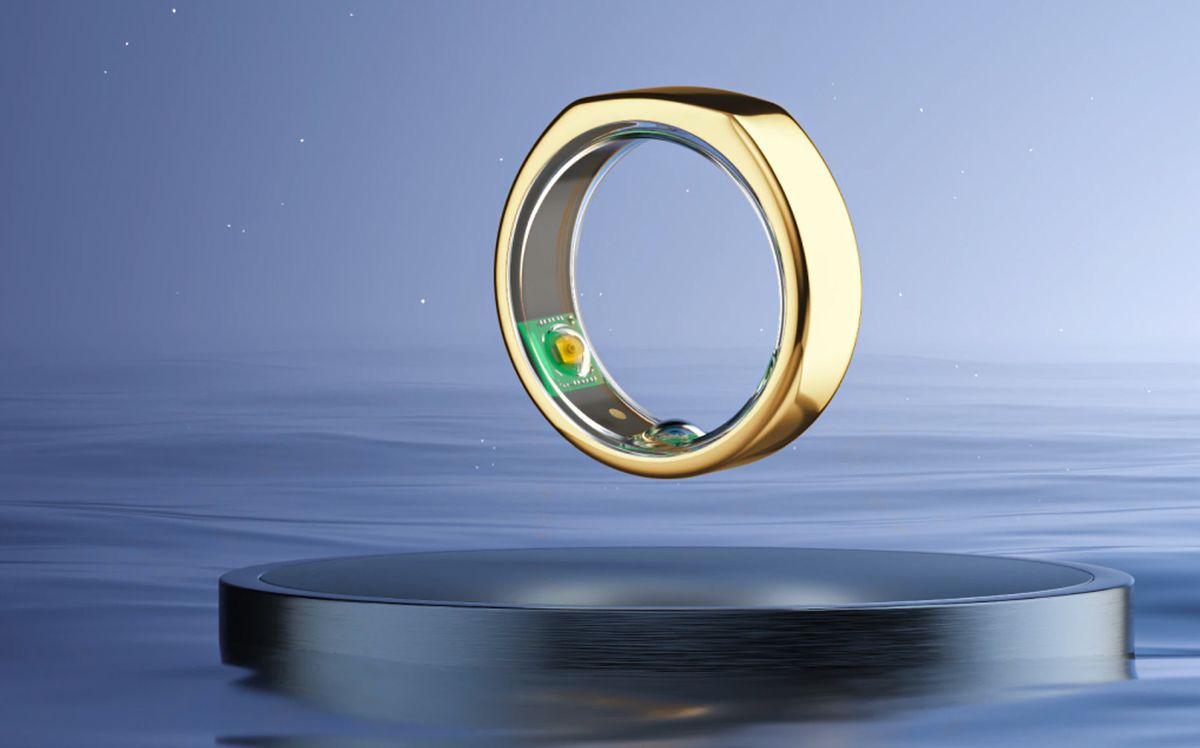
While the original Fitbit was designed to be clipped on to pants or running shorts, in recent years the company has devoted its designs to smartwatches and some of the best fitness trackers around. But according to a recent patent, the company is now considering the possible applications of a smart ring.
What’s interesting about this is that the patent doesn’t suggest that the ring would be to replace its existing wearables, but to augment them by measuring blood oxygen saturation levels (SpO2) via built-in optical sensors.
This could potentially offer far better accuracy than what’s provided by wrist-based solutions like Fitbit’s current stable of fitness trackers. Indeed, a ring’s form factor is a closer match for pulse oximeters used in a clinical setting, which clip onto a finger and pass light from one side to a photodetector on the other. As oxygenated and deoxygenated blood absorb light differently, the measurement given can be used to reveal your SpO2 figure.
Wrist based wearables are different. Your wrist is obviously thicker than a finger, and the technology of wearables doesn’t usually wrap all the way around. So SpO2 sensors on fitness trackers use reflected light instead. It gives you an approximation, but accuracy certainly isn’t as high as with a dedicated pulse oximeter.
According to the patent, the ring would pass the data it collects to your phone or Fitbit wearable via Bluetooth or NFC. Crucially, Fitbit mentions the ring could contain a motion tracker — not for counting steps, but to ensure the wearer isn’t moving around, which isn’t great for accuracy. “The motion sensor can be used to remove noise from the data caused by motion,” the patent reads, while adding that it can also include “power saving measures to extend the battery life”.