Here's How Much a Steam Deck Equivalent Gaming PC Build Would Cost in India
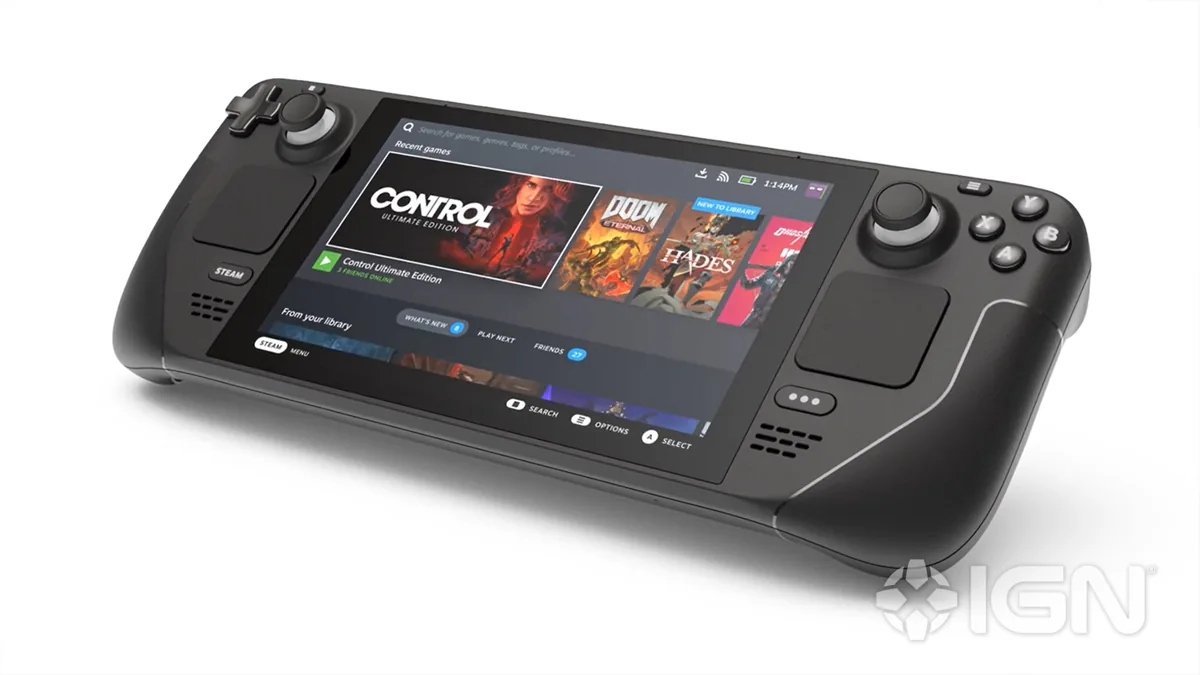
Valve’s announcement of the Steam Deck surprised everyone yesterday, most of all PC gamers with the components that the portable console is packing. The Steam Deck is, by all means, a standard PC made with a proprietary mainboard in a smaller form factor, which begs the question – just how much would a proper desktop PC build cost to match the Steam Deck’s power?
Steam Deck Price and Specifications
Here’s a look at what’s powering the Steam deck under the hood:
- CPU: 4 Cores/8 Threads (AMD’s Zen 2 architecture), 2.4-3.5 GHz.
- GPU: 8 Compute Units (AMD RDNA 2 architecture), 1-1.6 GHz.
- Power draw: 4-15 Watts
- RAM: 16 GB LPDDR5
- Display: 1280 x 800 (720p, 16:10 aspect ratio), 60 Hz 7-inch panel with 400 nits of brightness.
- Operating system: SteamOS 3.0 based on Linux Arch, KDE Plasma in desktop mode
- Connectivity: Bluetooth 5.0, Dual-band WiFi 2.4 and 5GHz.
- Audio: Stereo speakers with multi-channel audio via Display Port over USB-C, 3.5mm headphone jack.
- Price and storage: $399 (64 GB SSD), $529 (256 GB SSD), $649 (512 GB)
The 512 GB model also comes with an an anti-glare etched glass screen.
Steam Deck Gaming PC Build Equivalent
For this PC build, let’s assume that component prices are not as abnormally high as they are in current times due to a global chip shortage.
Starting with the core components, the CPU and GPU, Valve is using a fairly component for its APU. The CPU is a 4-core AMD Zen 2 processor, which is basically Ryzen 3 3100 underclocked from its , but the GPU is a little more complicated affair.
The graphics chip is built on the same RDNA 2 architecture from AMD that is present on its desktop Radeon RX 6000 series, as well as the PS5 and Xbox Series X|S consoles. However, the Steam Deck’s GPU is a cut-down version of the main RDNA 2 GPU, trimmed down to 8 compute units (CUs). For reference, the PS5 has 36 compute units, the Xbox Series S has 20, and the lowest-level Radeon graphics card has 28 CUs in the RX 6600M. This makes hunting down a similar GPU in the desktop space quite hard, as certain RDNA 2 specific features can’t be used on entry-level GPUs, new or old.