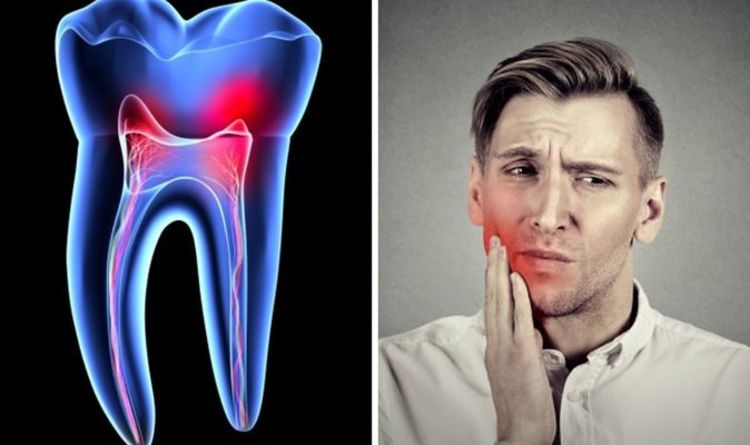
A staggering 90 percent of adults in the UK have some gum disease on their teeth, and gum abscesses can often occur as a result. How do you know if your inflamed gums are dental abscesses?Express.co.ukreveals the signs and symptoms of dental abscess and how to treat it.
What is a dental abscess?
Abscesses can occur on many parts of the body, including the inside of your mouth.
A dental abscess is a collection of pus that can form in the mouth as a result of a bacterial infection.
Dental abscesses can pop up in and around the tooth, in the bones holding the teeth together, or on the gums.
Having an abscess in any of these places can lead to serious complications.
READ MORE- Dentist in lockdown: Are dentists open? Can I see a dentist?
What causes dental abscess?
Plaque is a sticky film that builds up on your teeth and it contains millions of bacteria.
If you don’t clean your teeth well enough, the bacteria in plaque produces damaging acids.
This can lead to tooth decay, gum disease, and dental abscesses
Dental abscesses are normally caused by poor oral hygiene, consuming too much sugar or starch, a dental injury, or a weakened immune system.
Flossing or using an interdental brush once a day and brushing your teeth with a fluoride toothpaste for two minutes each time should keep abscesses away.
Never use mouthwash after brushing your teeth, as this will make the protective toothpaste redundant.
How do you fix it?
If you think you have a dental abscess, it is important to see a dentist as soon as you can.
Ring your registered dentist to book an appointment, or if it is out of hours listen to their answerphone message to find out how to access out-of-hours dental treatment.
If you don’t have a dentist, you can find one by calling NHS 111.
Don’t ring your GP because they will not be able to help you.
If you are struggling to breathe or swallow or have swelling around your eyes or neck, go to A&E immediately.
The dentist will remove the source of the infection and drain away the pus.
Which treatment you will be given depends on where the abscess is and how severe the infection is.
You may need the affected tooth removed or you might need a root canal.
On the day, the dentist may simply make an incision and drain the abscess.