Porsche Mission R concept unveiled at Munich motor show
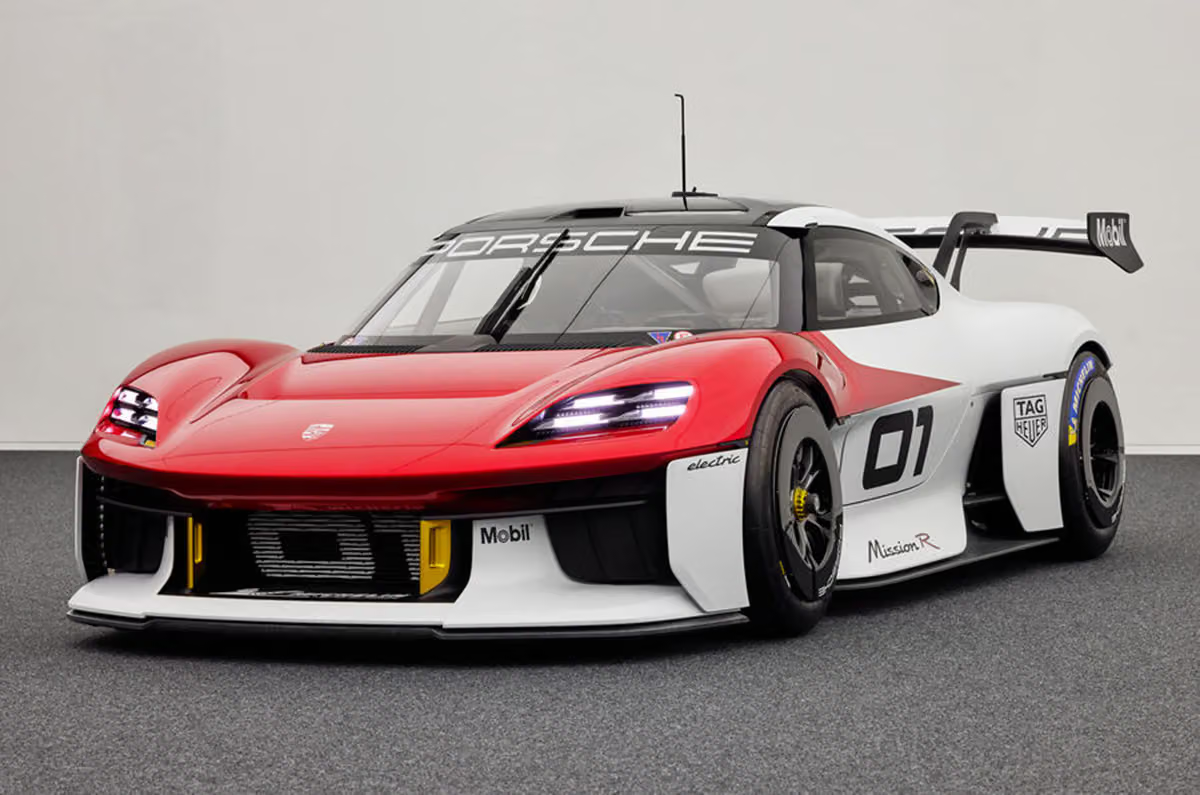
The new Porsche Mission R concept previews an electric one-make racing car that could debut in 2025 – and also gives strong hints as to the styling of the forthcoming electric 718 Cayman.
- Its twin electric motor setup makes 611hp in standard mode
- Qualifying mode pushed output up to 1,088hp
- 80-85kWh battery allows for around 40 minutes of racing
Porsche Mission R concept: what is it?
The new machine is a joint development of Porsche Motorsport and the Porsche Style design studio. The concept features a carbonfibre roll cage that is built directly into the bodywork, which helps to reduce both the weight and size of the car, particularly saving space in the roof. Current motorsport rules require cars to be fitted with steel roll cages, although Porsche hinted it hoped that might change before any production version of the car is launched.
Porsche Mission R concept: electric powertrain
Shown in Munich, it utilises powertrain technology from the Taycan, and has been developed to offer performance between a 911 GT3 Cup and GT3 R. The twin motor set-up features two settings, with the 611hp available in standard mode raised to 1,088hp for the special qualifying mode. The front motor produces up to 435hp, with the rear producing 653hp. Porsche says that the Mission R has a top speed of 300kph, and can achieve the 0-100kph sprint in less than 2.5 seconds.
Unlike the Taycan, the Mission R features a single gear, because the use of rolling start in most privateer-level racing events removes the need to optimise acceleration from a standstill. There is also an F1-style Drag Reduction System to reduce downforce, although because the car is intended for customer racing Porsche has twinned it with a two-stage rear wing and adjusting flaps on the front wing that help to balance the stability of the car to make it easier for amateur drivers to control.
Porsche Mission R concept: battery and charging
The Mission R is powered by a high-voltage 80-85kWh battery that Porsche says is intended to give around 40 minutes of race time. A front axle energy recovery system is used to help reduce the necessary battery size. It is said to hark back to a mid-engined design, with the battery mounted where the combustion engine would have previously sat. The target is for the car to weigh a total of 1,500kg, which would be close to current customer racing cars.