Prostate cancer: Persistent back pain could be a warning sign of the disease
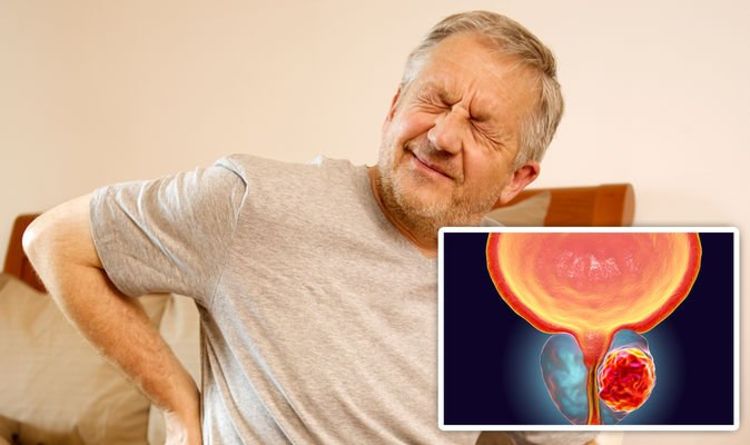
Most symptoms of prostate cancer are similar to the signs of an enlarged prostate – a very common occurrence in older age. However, if the cancer is left to spread to other parts of the body, there’ll be things to look out for.
Macmillan Cancer Support explained the first sign of a secondary cancer in the bones is “usually an ache in the bone”.
This tends to occur in the back or in the hips, and the pain gradually worsens “over a few weeks”.
The pain may be felt during the day and night, and painkillers are usually required to ease the discomfort.
Symptoms of an enlarged prostate can include the following:
- Difficulty starting to pee
- A frequent need to pee
- Difficulty fully emptying your bladder
Treatment will depend on how severe symptoms are, but lifestyle changes are usually recommended; this includes:
- Drinking less alcohol, caffeine and fizzy drinks
- Limiting your intake of artificial sweeteners
- Exercising regularly
- Drinking less in the evening
Medication can also be offered to reduce the size of the prostate and to relax the bladder.
If you notice any of these symptom, do tell your GP who can help determine whether it’s an enlarged prostate or prostate cancer.
Macmillan confirmed the first test used to diagnose prostate cancer is a rectal examination.
Following this, your GP may refer you for other tests at the hospital.
“Most prostate cancers grow very slowly,” assured the charity. “Even if it takes a couple of weeks to get your results, it is unlikely that the cancer will change during this time.”
Treatment options include radiotherapy, surgery and hormonal therapy, which will include follow-up appointments.
If you’ve been diagnosed with prostate cancer and you’d like to speak to someone for support, Macmillan is here for you.
The Macmillan Support Line can be reached on 0808 808 00 00, specialists can also be contacted online from the website.
The charity also has an “Online Community” where people can share their experience with the disease and experts can be asked questions.
For more information on prostate cancer, please do visit Macmillan Cancer Support.
Stay connected with us on social media platform for instant update click here to join our ????️????️ Twitter, & Facebook
We are now on Telegram. Click here to join our channel (@TechiUpdate) and stay updated with the latest Health headlines.
For all the latest Health News Click Here
For the latest news and updates, follow us on Google News.
Also, if you like our efforts, consider sharing this story with your friends, this will encourage us to bring more exciting updates for you.