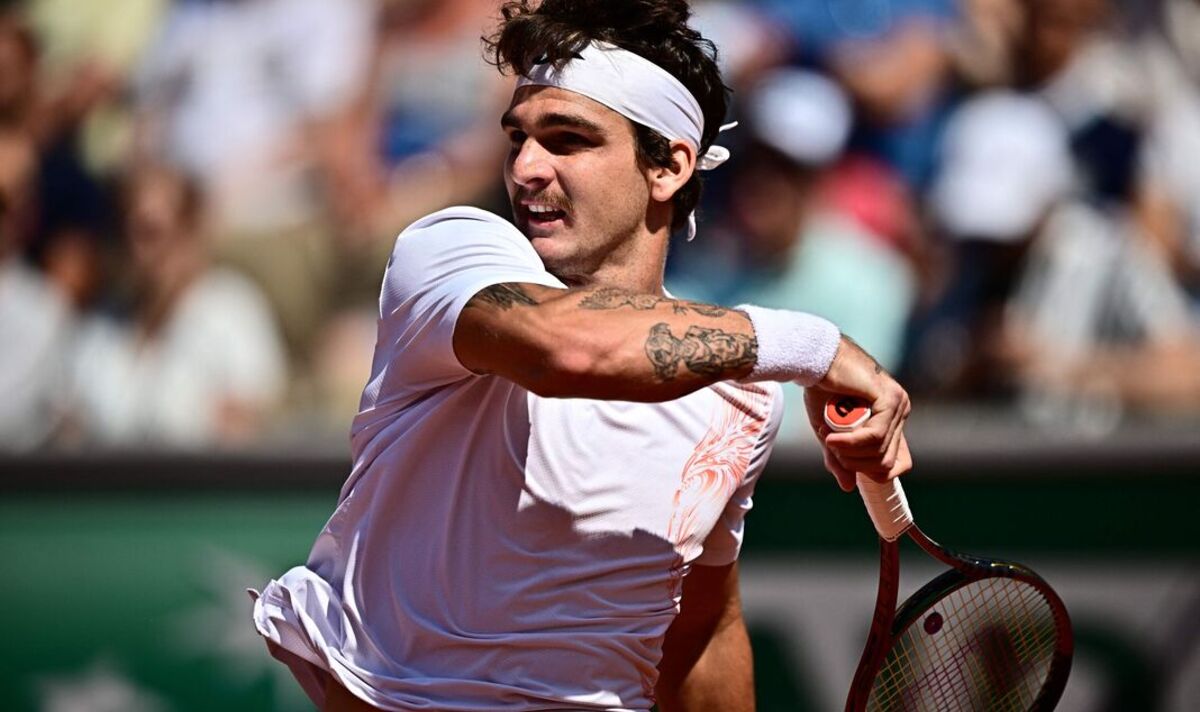
Tennis skills stalled? 4 training gadgets to make you the next Djokovic
“I noticed these tennis courts a block from my new house, and just got talking to a coach through the fence one morning,” said Ms. Avila, 34, who works in the luxury travel industry. “The next day I was on the court for my first lesson at 5:30 a.m., and I haven’t looked back since. I’ve completely fallen in love with the sport…I now own three rackets.”
According to the United States Tennis Association (USTA)–the governing body for the sport in the U.S.–Ms. Avila’s story is a common one. The organization pumped $50 million into local clubs and courts during the pandemic, and that investment is now paying dividends as the sport enjoys what USTA Managing Director of Engagement and Services Mickey Maule describes as a “golden era” for beginners.
Mr. Maule warned, however, that one thing all students of the sport will eventually hit (aside from balls) is plateaus, especially if they’re one of the more restlessly competitive of the estimated 4 million new and returning tennis players in America in 2020, according to the USTA. Whether it’s your double-handed backhand or your topspin serve, at some point, you’re going to run into a temporary roadblock.
We asked Ms. Avila and three other typical players to share their learning-curve frustrations and then, with guidance from tennis experts, identified the gadgets best designed to circumnavigate them. Because as grand-slam great Martina Navratilova once pointed out: “Whoever said ‘it’s not whether you win or lose that counts’ probably lost.”
“I know a strong one-handed backhand will give me an advantage, but I haven’t mastered it. Is there anything that can help me?” —Brennwyn Romano, 32, Dallas, Texas
The key difference between two-handed and one-handed backhands is wrist strength, said USTA managing director of engagement and services Mickey Maule, who called wrist power “a massively underrated part of your tennis game.” The Powerball Gyroscope can help you build that—and strengthen your racket grip—quickly. The hand-held gizmo contains a rotor that spins at up to 300 revolutions a second, powered just by rotating your wrist. The faster you turn (use a “pot stirring” motion), the more the Powerball fights back, and the stronger your wrist and forearm become. From $28, rpmpower.com