Contact UsDMCA policyAbout UsPrivacy PolicyTerms of UseDisclaimerCookie Policy
Trending

Was the N.B.A. Season Too Much Too Soon?
Was the N.B.A. Season Too Much Too Soon?

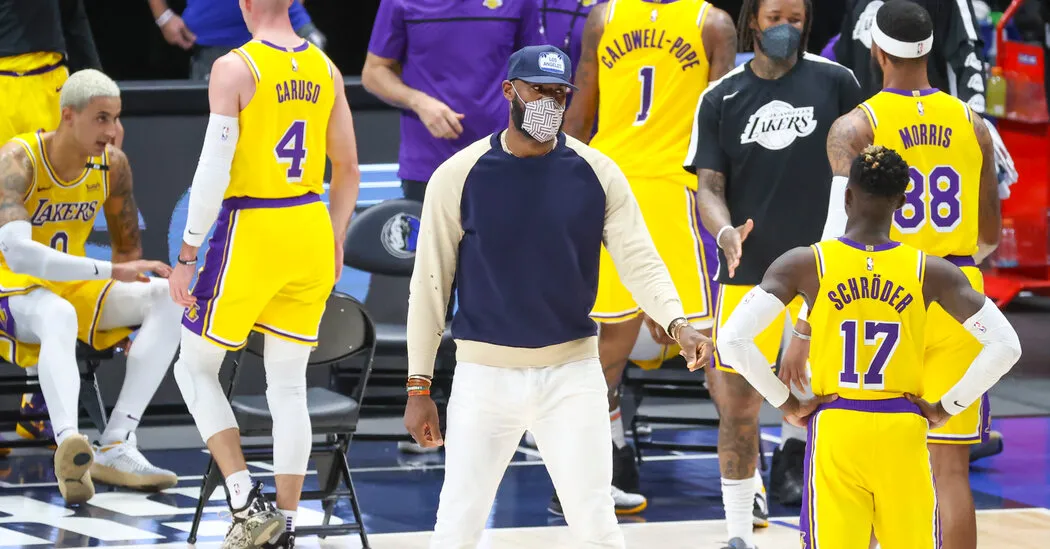
The Los Angeles Lakers will not play another game until October, but LeBron James was apparently not ready to stop dunking. Fresh off the maiden first-round playoff exit of his career, James responded to a cresting wave of injuries sustained by marquee stars with a social media scolding of the N.B.A.

In response to a sobering bulletin about the Los Angeles Clippers’ Kawhi Leonard, who is out indefinitely after sustaining a knee sprain in the Clippers’ second-round series against the Utah Jazz, James took to Twitter. He offered commiserations to fans about the record-setting eight current All-Stars who have missed at least one game this postseason — and criticized league officials for not doing more in this pandemic season to “protect the well being of the players.”

By more he meant less: James said he issued clear warnings about the increased injury risk attached to wedging a 72-game regular season between Dec. 22 and May 16, with the playoffs timed to end right before the Tokyo Olympics, compared with starting in mid-January and possibly playing fewer games. The 2019-20 season, remember, strayed into October and spawned the shortest off-season in league history after a four-month interruption imposed by the coronavirus pandemic.

“They all didn’t wanna listen to me about the start of the season,” James wrote. “I knew exactly what would happen.”


Self-serving? Yes. Vague? Yes again. There was an undeniable whiff of convenience to James’s remarks, as a rationalization for the swift end to the Lakers’ title defense, along with a lack of clarity. James did not specify to whom, when or where those warnings were registered. He was also surely aware that the 2020-21 schedule was mutually agreed upon by league officials and the National Basketball Players Association, and that starting later, as James had hoped, very likely would have cost both parties significant television revenue by falling shy of the 72-game threshold.

Yet the soliloquy, above all, amounted to a loud and powerful “told you so” from James that drowned out the disclaimers. It carried more bite than his recent blasts about the N.B.A.’s decision to stage an All-Star Game in Atlanta in March, followed by protests against the playoff play-in tournament that his Lakers, after long-term injuries felled both James and Anthony Davis, had to win to make the playoffs after slipping to No. 7 in the West.

Beyond the uncomfortable spotlight he brought to a dampened N.B.A. postseason increasingly known for who isn’t able to play, James said what so many of his fellow players have surely been thinking — using his biggest-in-the-game megaphone. The rant highlighted a prime concern in front offices and among medical staffs throughout the league: What cost, present and future, did the stacking of two pandemic seasons with such a short turnaround impose?

The players’ union agreed to that timeline after learning that the N.B.A.’s television partners pushed for it. The players, who essentially split annual profits and losses evenly with team owners, were told that starting in December rather than January would result in a difference of roughly $500 million in revenue, after last season’s shortfall of $1.5 billion. No less important to the league office was the opportunity to wrap this season up in time to return to its usual October-through-June arc in 2021-22.

In retrospect? It was a giant ask. The physical and mental toll of last season’s restart in the Florida bubble, combined so soon with the rigors of a season in home markets governed by strict Covid-19 protocols and daily testing that ate into rest and recovery time, had teams fearful from the start of a spate of soft-tissue injuries. Player stress and training time lost, with fewer practices and a second-half crush of games to make up earlier postponements, only increased those fears.