Do Stretch Mark Removal Creams Actually Work? Here's the Truth
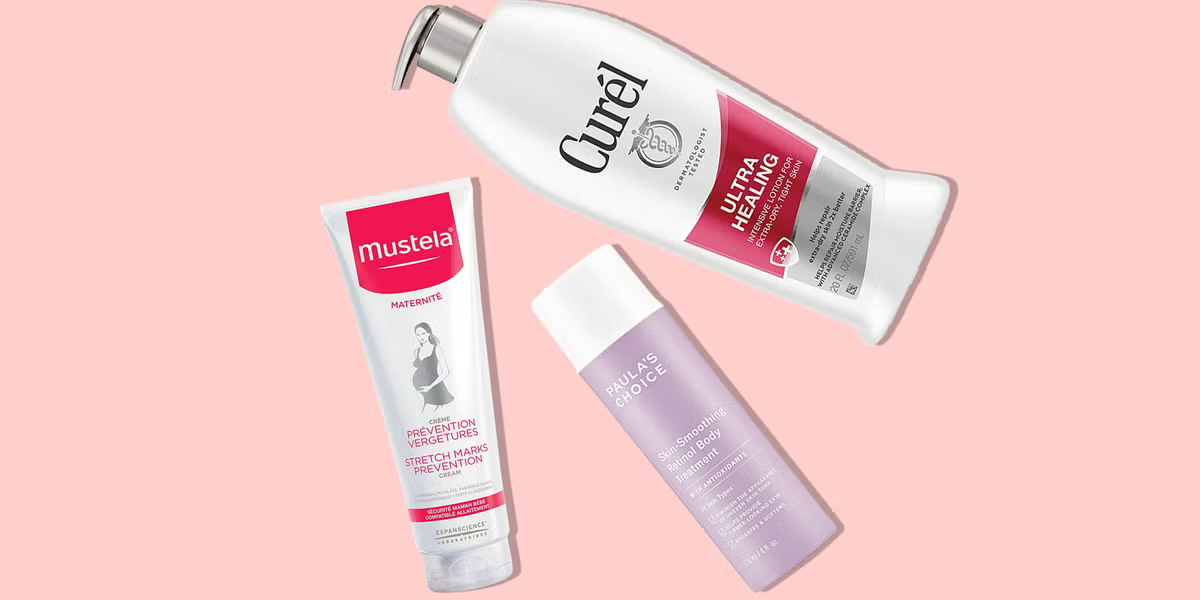
Different types lines appear on our bodies as we age throughout the years, from wrinkles to stretch marks. Stretch marks are the long, narrow lines that, according to the American Academy of Dermatology, develop when our skin stretches (or shrinks!) quickly, causing the collagen and elastin support network to rupture.
Depending on your skin color, stretch marks can range from red, to purple, to dark brown, and commonly crop up on the abdomen, hips, thighs, and/or breasts, usually around puberty and during pregnancy: In fact, a 2015 study in the Journal of American Academy of Dermatology found that more than half of all pregnant women will develop stretch marks during pregnancy.
Though millions of people develop stretch marks at some point in their lives, many strive to get rid of them as quickly as they show up. If you’re looking to disguise or get rid of your stretch marks, here’s everything you need to know:
Do stretch mark creams actually work?
Unfortunately, most stretch marks can’t be fully removed, confirms Manish Shah, M.D., a plastic surgeon based in Colorado. This is because stretch marks are technically breaks in the skin, which are difficult to repair. However, he says that there are ways to soften the appearance of stretch marks by improving the collagen content of the skin and getting the color to fade with time.
The best way to treat stretch marks is with prevention: make sure that your skin is healthy and strong. “Dietary fish oil supplements can help keep the skin hydrated and elastic, vitamin C supplements ensure that you make good quality collagen, and the use of moisturizers and sunscreen protects the skin from continuing damage,” says Dr. Shah. For at-home stretch mark treatment, Dr. Shah says the best thing to do for a new stretch mark “is to vertically massage the stretch mark and cover it with sunblock to soften and fade it.”
Birnur Aral, Ph.D, director of the Beauty Lab at the Good Housekeeping Institute, suggests “products that can increase elasticity of skin before the stretching injury happens.” She suggests looking for “cohort topicals with hyaluronic acid (a powerhouse humectant), and tretinoin, a prescription retinol cream.” However, pregnant women should consult their doctors for recommendations: certain collagen- and elastin-producing ingredients can be iffy for use during pregnancy.