Plymouth walks: Top two walks around Plymouth to stride out on this winter
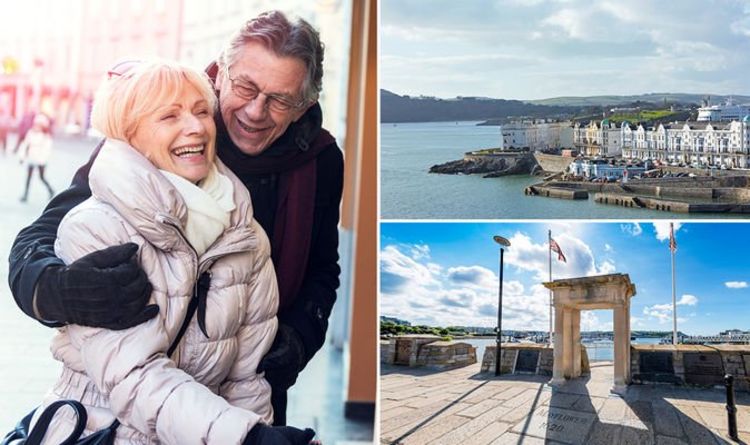
6. NEXT STOP: Drake Statue
This statue of Sir Francis Drake was unveiled in 1884 when the Hoe was improved in time for the 300th anniversary of the Spanish Armada. Sir Francis Drake was an adventurer and the first Englishman to circumnavigate the globe. He was knighted in 1581.
To the Spanish, he was known as the pirate “el Draque”. In 1578, Drake captured a single Spanish ship, the Nuestra Senora de la Concepcion, laden with 25,000 pesos of Peruvian gold – equivalent to £7million today. It was Drake’s most famous prize.
In 1587 he sailed to the port of Cadiz in Spain and set fire to the ships of the gathering Spanish naval forces, before raiding forts along the Portuguese coast. This delayed Spain’s invasion of England by a whole year.
Drake died of dysentery off the coast of Panama in 1596 and was buried at sea in a lead coffin. Now, turn back to face the sea and take a short walk towards the stone balustrades of the Belvedere.
7. NEXT STOP: Plymouth Sound
You are standing on top of the collonaded terraces of the Belvedere, completed in 1891. It is informally known as the “wedding cake”.
From this point, you can see the areas that surround Plymouth Sound. Looking out from left to right (East to West) you can see the following:
The River Plym opens out into the Sound from the East in front of the Mount Batten peninsula. Mount Batten tower stands on a hill, and the Cattewater breakwater stretches out to protect the harbour.
Looking further our, behind that you can spot Staddon Point Battery and Bovisand Fort which were built after the construction of the breakwater, to defend the eastern channel.
Drake’s Island is prominent in this view, but you’ll find out more about it later in the trail at Stop 11.
Looking further west, and back in Plymouth, you can see the outlines of the historic docks, naval facilities, churches and houses of Millbay, Stonehouse and Devonport.
Next, turn back away from the water and across to the tall properties of Elliot Terrace.
8. NEXT STOP: Elliot Terrace
These buildings were built in the 19th Century, as Plymouth’s prosperity grew. Facing the sea, they were built specifically to enjoy the view.
Sir Arthur Conan Doyle, the creator of Sherlock Holmes, lodged briefly at number 6.
Number 3 Elliot Terrace, in front of you, was the residence of Lord and Lady Astor. It was gifted to the city and it is now the Lord Mayor’s official residence, used for civic events.
Lady Nancy Astor was born in 1879 in Virginia. After moving to England in 1905 she married Waldorf Astor. When Waldorf inherited his father’s seat in the House of Lords in 1919, he was forced to give up his seat in the House of Commons. His wife stood in his place, as the conservative representative and won the resulting by-election, just over a year after (some) women had won the right to vote. She became the first woman to take her seat in the House of Commons. Nancy Astor was an unusual candidate: she was American, divorced and not University educated.
However, she could hold an audience, was witty and intelligent and had already done much work in Plymouth including establishing maternity centres and creches. In 2019, the Nancy Astor statue was unveiled to mark one hundred years since she took her seat in the House of Commons
Now, head off the Hoe promenade taking a left down the road opposite the Grand Hotel to look over the park. Make your way down the steps towards the water.
9. NEXT STOP: Promenade Pier
For the Victorians, a big draw to the foreshore was the Promenade Pier which opened in 1884, complete with a landing stage for pleasure steamers, a clock tower and shops.
The pier cost £45,000 and was funded by the people of Plymouth.
In 1891, a pavilion was added to the end of the 146-metre-long pier. This provided 2,000 seats for entertainments including concerts, dancing and roller skating.
Competition from new attractions such as cinema meant that the pier faced financial troubles in the 1930s. The pier was bombed in 1941 and later demolished in 1953. As can be seen, especially at low tide, the foreshore has been built up and filled in overtime.
Take a short walk further along the waterfront, stopping by Tinside Lido.
10. NEXT STOP: Tinside Lido
Bathing was a major pastime in Plymouth.
The bathing trend peaked between the wars when Plymouth boasted 60 hotels, most of which were near the Hoe. During the post-war rebuild, bathing was a good way to clean and cool off.
The striking Art Deco lido that you are now looking over was originally built by the council as a ladies bathing pool. It opened in 1935 with pavilions, changing rooms, terraces and pool.
The pool was used for swimming lessons and community events such as beauty pageants. The lido was closed in 1992, given Grade II Listed Building status in 1998 and then reopened in 2005 after a £3.4million restoration.
The “lion’s den”, a semi-circular structure on the foreshore opposite your next stop, was a gentleman’s bathing area. The structure is thought to have acted as a screen for gentlemen bathing in the nude.
Continue a short walk along the waterfront.
Stay connected with us on social media platform for instant update click here to join our ????️????️ Twitter, & Facebook
We are now on Telegram. Click here to join our channel (@TechiUpdate) and stay updated with the latest Life Style headlines.
For all the latest Life Style News Click Here
For the latest news and updates, follow us on Google News.
Also, if you like our efforts, consider sharing this story with your friends, this will encourage us to bring more exciting updates for you.