“It Was All About the Nights”—Max Mara’s Ian Griffiths on the Club Kid Life of 1980s Manchester
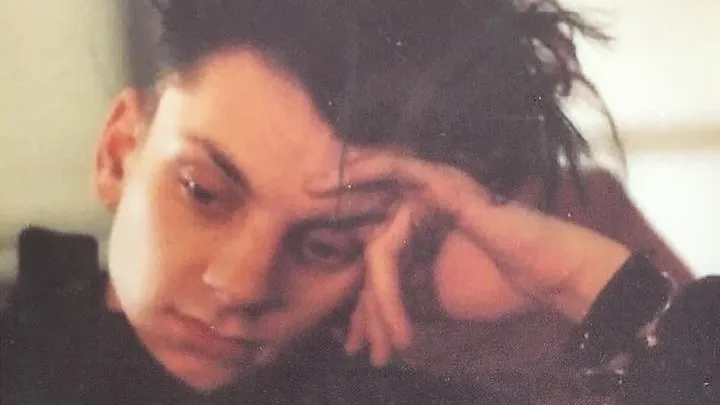
I finished up in hospital on a few occasions. In fact, on one occasion I was not admitted to hospital. I was sent home and told, ‘What do you expect? If you dress that way, this is what will happen to you.’ So you attracted a lot of very negative attention, but that created a sense of camaraderie. There are some very, very painful memories too, from that time. It wasn’t all fun, at all, but it seemed—I don’t know—a fair price to pay.
Would you describe this violence as stemming from homophobia?
A great deal of it was homophobia. I think a lot of mainstream masculine culture associated anything to do with dressing up, fantasy, hair. and makeup with, homosexual behavior. And you know, lots of us were gay—but not all of us by any means. The great irony is that we used to run the risk of getting beaten up, queer-bashed, but the last thing on our minds with all these flamboyant costumes was, if you like, sex. It wasn’t done for that. It wasn’t done for the purposes of sexual attraction at all. And sex wasn’t so easy in some of those costumes!
We didn’t drink that much either. There was something quite restrained about the whole scene, but at the same time, there was in Manchester, and in the other big cities, a really active kind of mainstream gay scene, like the clone scene. The clones were the guys with the mustaches and the check shirts who were very promiscuous, but they were not targets in the way that we were.
[Talking about this] brings back a feeling that I had very strongly at the time, which was not being particularly welcomed in the gay community. I, and people like me, would turn up occasionally at a kind of mainstream gay club and not be admitted. They would say, ‘Oh, you need to go to, say, Dickens [club].’ And I would [ask], ‘Why?’ And they’d say, ‘Because you’re transvestites and that’s where they go.’
I used to have to explain, ‘I’m not dressing as a woman, I’m a boy wearing a wedding dress. I’m perfectly happy as a boy or a man. I’m not trying to look or act like a woman.’ But there was no understanding of any of that. I never got admitted into Hero’s, which was the big gay club in Manchester—the equivalent of say Heaven in New York. I didn’t feel at all understood or supported by the gay community at that time.