View: Let Tokyo Olympics be for Indian sports what 1983 World Cup was for cricket
This is the best time to
stock of where we stand as a sporting nation. Have we done enough for our athletes? Or is there room for much more? Will our pride and joy remain a one gold, two silver and four bronze flash in the pan, an ‘anomaly’ like the six-medal haul in the 2012 London Olympics that was followed by a paltry two in 2016 in Rio? Or can Indian sport pivot from this point and make medal-winning at the highest levels of sport — not just in the Olympics — a regular feature?
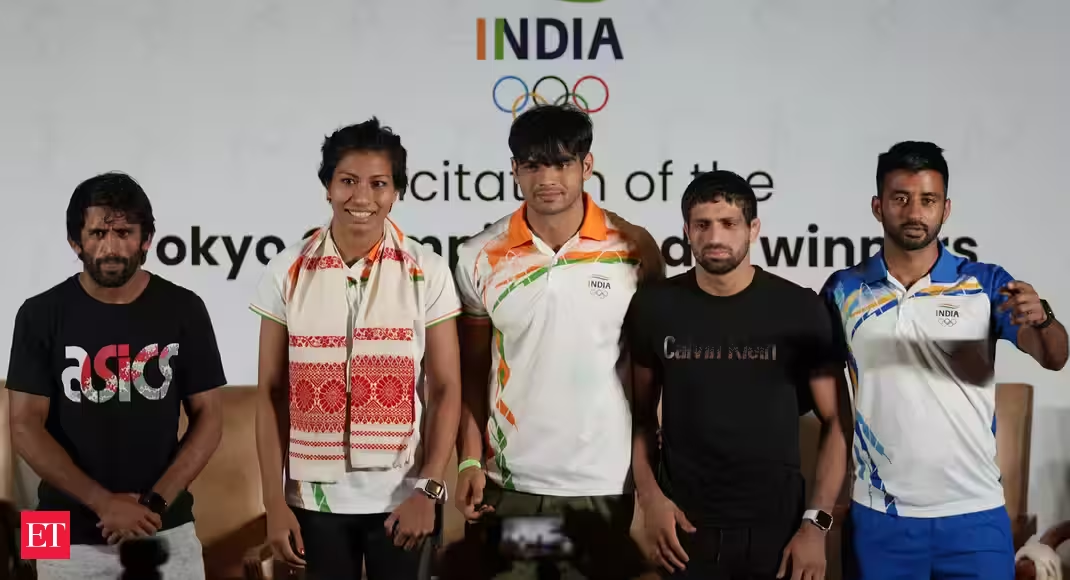
Also, have India’s athletes performed to the best of their abilities? It is heartening to know that along those who did win medals for India in weightlifting, badminton, hockey, boxing, wrestling and javelin, Indian athletes reached 31 quarterfinals and beyond across 10 disciplines, with athletes like the women’s hockey team, wrestler Deepak Punia and golfer Aditi Ashok missing out on a bronze medal by the proverbial whisker. The men’s 4×400 m relay team created a new Asian record in the qualifiers, despite not reaching the Olympic final. These are all sure signs of sporting ascendancy.
With 126 athletes across 18 sports disciplines, India had sent its biggest-ever contingent to Tokyo, which participated in 69 cumulative events, the highest ever for the country. Experienced campaigners like weightlifter Mirabai Chanu, wrestler Bajrang Punia and shuttler PV Sindhu performed superlatively, while Olympic newbies like boxer Lovlina Borgohain and wrestler Ravi Dahiya stepped up when needed to make their mark. Javelin thrower Neeraj Chopra, of course, reached that rare level of individual sporting excellence by winning Olympic gold — joining an elite list populated only by India’s hockey legends and shooter Abhinav Bindra.
Victories and medals also need a bit of luck and form. But what has been truly epic is the new fearlessness — chutzpah, if you will — displayed by this new breed of Indian athletes. No longer are they there to just ‘be part of the Olympic ethos,’ but they are also hungry to win glory. This has been made possible by the tireless efforts of a vastly improved support system that includes both public and private infrastructural support.